
A Step Ahead
Mathildenhöhe Darmstadt
Exhibition Hall
Opening: Juni 6, 2026
June 6, 2026 – Januar, 31, 2027
How do we want to live? What role do design, architecture, and art play in our everyday lives? And how can designed spaces make social changes visible? The temporary exhibition A Step Ahead – 125 Years of Mathildenhöhe Darmstadt addresses these questions.
The exhibition will be on display from June 6, 2026, to January 31, 2027, in the Exhibition Hall at the Mathildenhöhe Darmstadt. The show is part of the World Design Capital Frankfurt RheinMain 2026 and will open during the two-day World Heritage Festival from June 6 to 7 at the Mathildenhöhe Darmstadt.
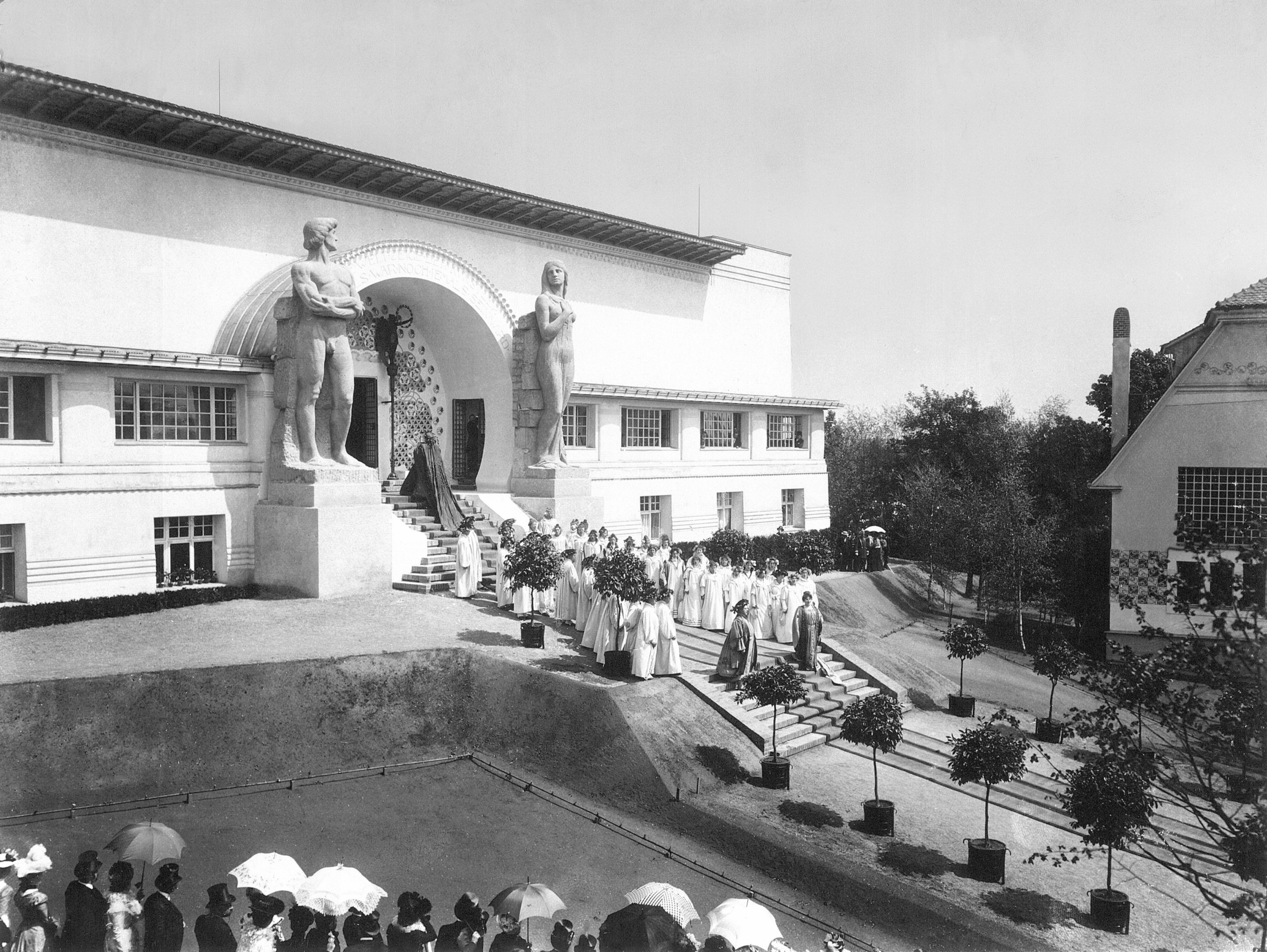
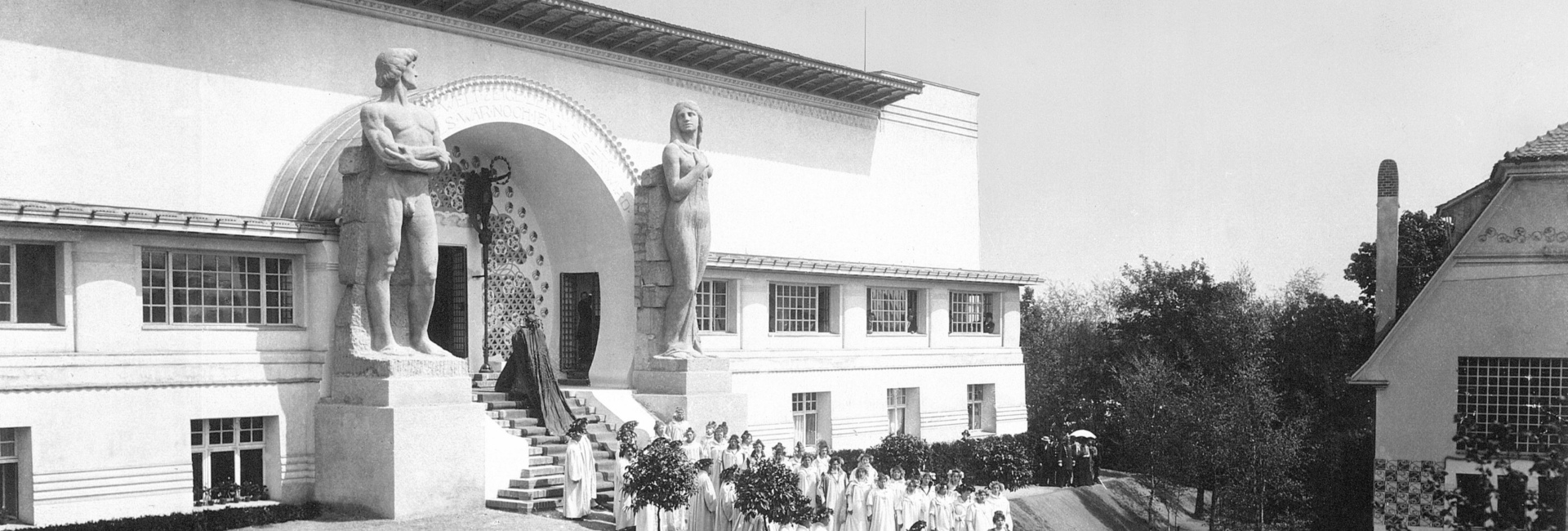
125 years after the first exhibition of the Darmstadt Artists’ Colony in 1901, „A Step Ahead“ bridges the gap between the reform ideas of early modernism and current questions of sustainability, inclusion, resource conservation, and community living. The starting point is the four historical exhibitions of the Darmstadt Artists’ Colony from 1901, 1904, 1908, and 1914, which decisively shaped the ensemble of today’s UNESCO World Heritage Site.
“The Mathildenhöhe Darmstadt is a site of international significance. The exhibition impressively demonstrates how closely the history of this ensemble is linked to central questions of the future, and why Darmstadt remains an important hub for architecture, design, and social discourse to this day. The Mathildenhöhe is a place of cultural identity for Darmstadt – but it must and should also serve as a driving force for the further development of our city,” says Hanno Benz, Lord Mayor and Commissioner for Cultural Affairs of the City of Science Darmstadt.
In four thematically designed halls, historical works from the Darmstadt Artists’ Colony enter into a dialogue with contemporary art and design positions as well as interactive stations. Featured works include pieces by Artists’ Colony members such as Joseph Maria Olbrich, Peter Behrens, Patriz Huber, Albin Müller, Bernhard Hoetger, Paul Haustein and Friedrich Wilhelm Kleukens, alongside contemporary works and projects by Andrea Zittel, Michael Jantzen, the Frankfurt/Amsterdam-based (un)woven studio, ponton works, Akpene Therése Gbogbo and Studio Jonathan Radetz.
This dialogue highlights how significantly the concept of design has evolved and expanded over the past 125 years: while around 1900 individual artistic personalities collaborated with manufacturers to develop new forms of living, today the focus is on interdisciplinary and co-creative processes. Themes such as material cycles, accessible design, and social participation serve as guiding principles throughout the entire exhibition.
“The Darmstadt Artists’ Colony never viewed design as mere decoration, but rather as a holistic and social responsibility. Many topics that are being intensively debated again today – such as progressive materials and the social aspects of housing – were already being negotiated at the Mathildenhöhe around 1900. It is precisely this surprising relevance that the exhibition brings to light,” explains Dr. Philipp Gutbrod, curator of the exhibition, Director of the Institut Mathildenhöhe Darmstadt and Cultural Affairs Officer of the City of Science Darmstadt.
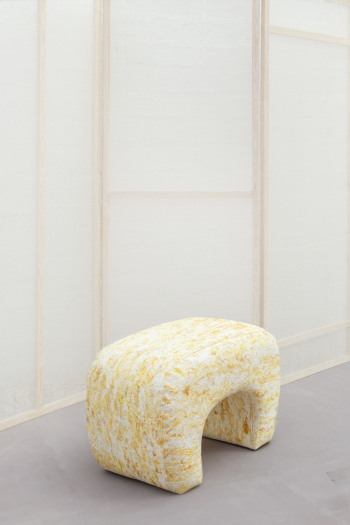
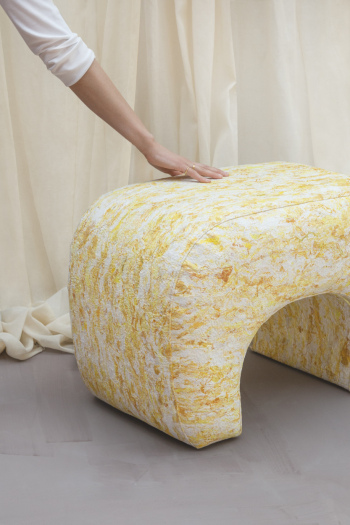
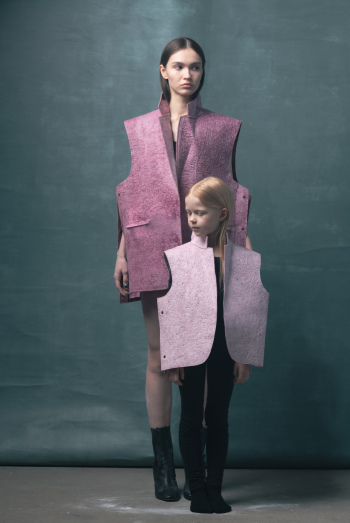
Among the central contemporary works is the inclusive WeKitchen, which enables community cooking and dining for people with diverse needs. With this piece, the exhibition revives a tradition for the first time since the era of the Darmstadt Artists’ Colony: presenting a fully functional room of everyday life within the Exhibition Hall. Other innovative contributions include sustainable bio textiles made from recycled textile fibers by (un)woven studio, as well as the Chito table lamp by ponton works, which is crafted from insect-based chitosan. Serving as a portal back into time are historical 3D reconstructions of the Artists’ Colony exhibitions, developed in collaboration with the Darmstadt-based Studio Faber Courtial. Finally, the exhibition is complemented by interactive stations where visitors can experiment with their own design processes.
The exhibition does not understand itself as a mere anniversary show, but as a living dialogue between past, present, and future. Historical designs, temporary architecture, posters, furniture, photographs, and design objects interact with contemporary positions that perceive design as a social responsibility.
“A Step Ahead* connects the international history of the Mathildenhöhe with the challenges of our present day and perspectives for future developments. In doing so, the exhibition makes an important contribution to the World Design Capital 2026 and demonstrates the cultural innovative power embedded within the Frankfurt RheinMain region,” emphasizes Dr. Susanne Völker, Managing Director of the non-profit Kulturfonds Frankfurt RheinMain GmbH.
An event organized by the Institut Mathildenhöhe Darmstadt as part of WDC 2026. WDC 2026 is funded by the State of Hesse, the City of Frankfurt am Main, and the Kulturfonds Frankfurt RheinMain.
Curator: Dr. Philipp Gutbrod, Cultural Affairs Officer at the City of Darmstadt / Director Institut Mathildenhöhe
Dateien / Texte
Press Release "A Step Ahead – 125 Years of the Mathildenhöhe Darmstadt"
Download (doc | 1.4 MB)
Fact Sheet "Mathildenhöhe Darmstadt"
Download (pdf | 160 KB)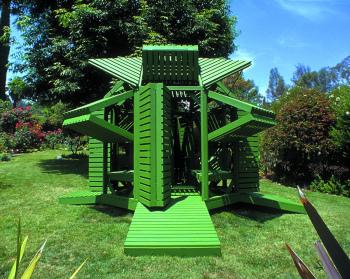
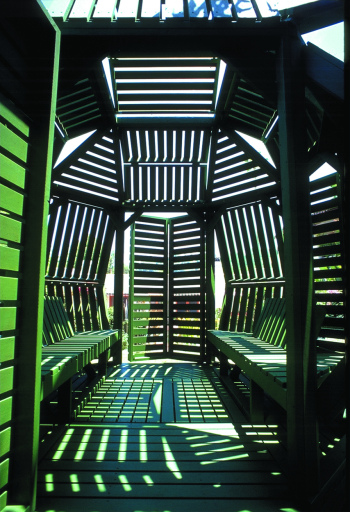
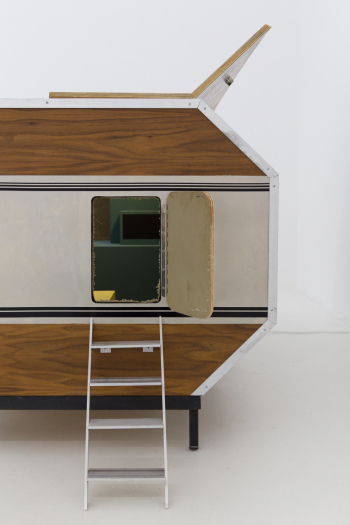
Andrea Zittel, A-Z Time Tunnel: Time to get to know people better, 2000, Installationsansicht, Ordne und finde mit, Sammlung Philara, Düsseldorf, 2015
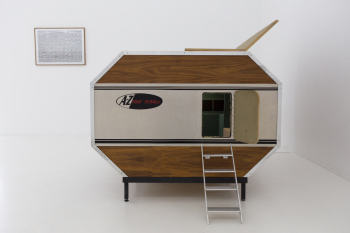
Andrea Zittel, A-Z Time Tunnel: Time to get to know people better, 2000, Installationsansicht, Ordne und finde mit, Sammlung Philara, Düsseldorf, 2015
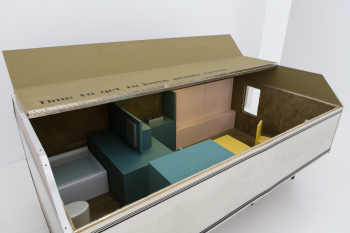
Andrea Zittel, A-Z Time Tunnel: Time to get to know people better, 2000, Installationsansicht, Ordne und finde mit, Sammlung Philara, Düsseldorf, 2015
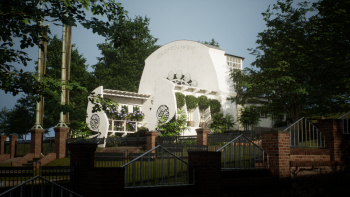
Joseph Maria Olbrich, Das Blumenhaus, 1901, 3D-Modell, 2026, Institut Mathildenhöhe / Städtische Kunstsammlung Darmstadt
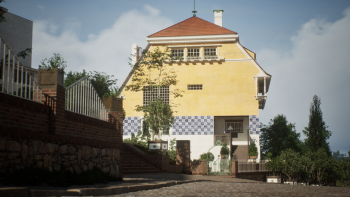
Joseph Maria Olbrich, Haus Olbrich, 1901, 3D-Modell, 2026, Institut Mathildenhöhe / Städtische Kunstsammlung Darmstadt
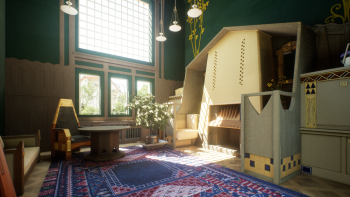
Joseph Maria Olbrich, Haus Olbrich, Innenansicht, 1901, 3D-Modell, 2026, Institut Mathildenhöhe / Städtische Kunstsammlung Darmstadt
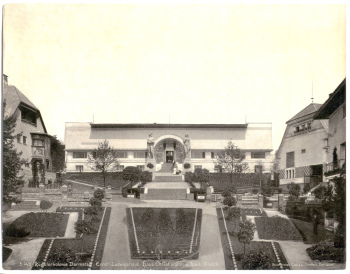
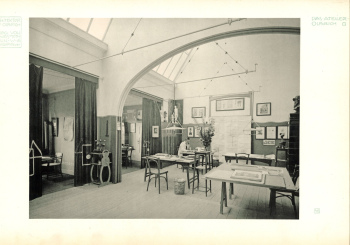
Joseph Maria Olbrich, Verlag Ernst Wasmuth, Berlin, Joseph Maria Olbrich in seinem Atelier im Ernst Ludwig-Haus, Blatt I. 47 aus den Wasmuth-Mappen, 1904